
WELCOME BONUS 300%
UP TO €2000 + 100
FREE SPINS
UP TO €2000 + 100
FREE SPINS
Home → Blackjack
Blackjack at Yeti Casino: Variants, Rules and Payouts
Which hands are excluded from Surrender?
Late Surrender allows the player to forfeit a hand after the dealer checks for Blackjack, returning 50% of the stake. This rule modifier improves the Return to Player (RTP) by approximately 0.08 percentage points compared to standard rules without this option.
The surrender action is strictly limited to the initial two-card hand and cannot be applied after any hits or splits have occurred. Early Surrender is significantly more valuable, potentially reducing the house edge by up to 0.6 percentage points, but it is extremely rare in online environments.
Players must avoid surrendering when the dealer shows an Ace unless they are counting cards with a True Count of +3 or higher. In most standard scenarios, basic strategy dictates that holding the hand yields a better long-term mathematical expectation than losing half the bet immediately.
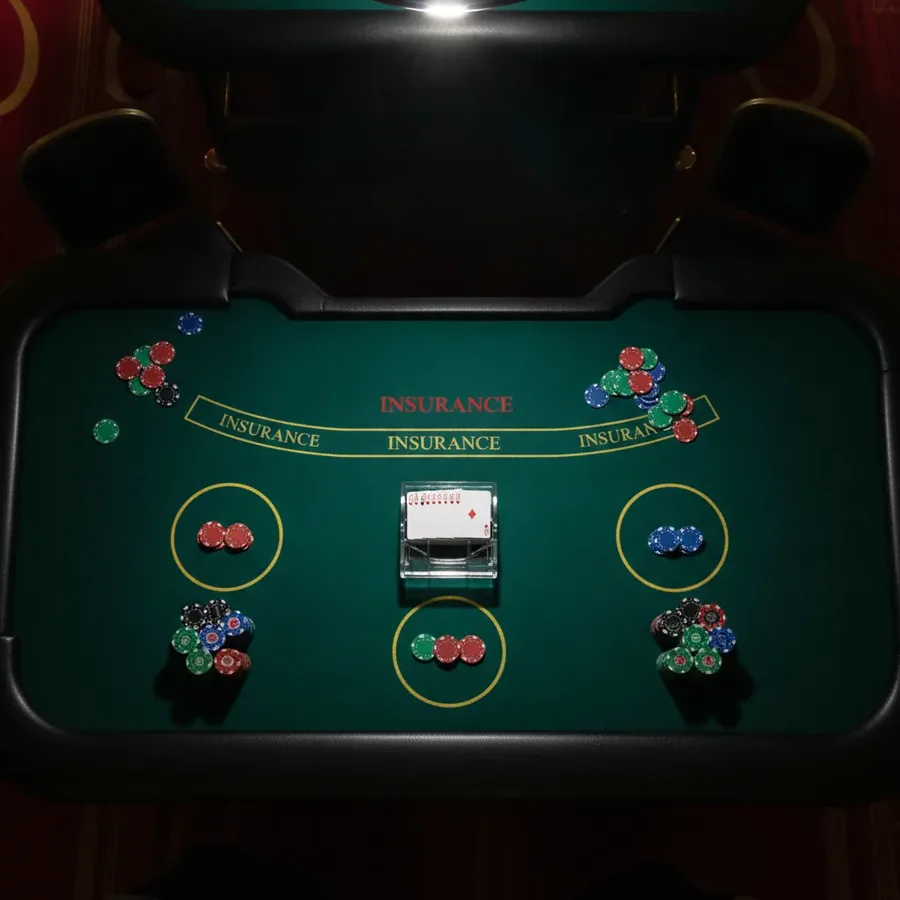
Ace Split: only one card per hand
Resplitting Aces (RSA) is a favorable rule that enhances the player's RTP by 0.08 percentage points in specific game variants. This modification allows players to separate a pair of Aces into two distinct hands, each receiving exactly one additional card.
Standard split rules typically permit splitting pairs up to four hands, but Aces are often treated as a special case with stricter limitations. The limitation to a single card per new Ace hand prevents infinite looping and reduces the strategic advantage of splitting this specific pair.
This restriction balances the benefit of creating two chances to hit Blackjack against the casino's need to limit exposure. Players utilizing basic strategy should recognize that while RSA improves odds, the one-card limit caps the potential upside compared to unrestricted splitting games.
Chose Wrong Table for 5 EUR Bankroll
Infinite Blackjack at Evolution supports stakes starting from 1 EUR, which fits comfortably within a tight 5 EUR bankroll. This table offers unlimited seats and features side bets like Any Pair, 21+3, Hot 3, and Bust It alongside the main game.
Lightning Blackjack starts at 1 EUR but introduces lightning multipliers up to 25x on winning hands, increasing volatility significantly. A small bankroll may deplete quickly during dry spells before hitting a high-multiplier win, making this table riskier for low-budget sessions.
Blackjack Party begins at 1 EUR and focuses on entertainment with two moderators rather than complex betting mechanics. For a 5 EUR budget, players should prioritize tables with lower minimums and predictable variance over high-variance bonus features to extend playtime.
Continuous Shuffling Machine shuffles after each round
Infinite Blackjack utilizes continuous shuffling mechanisms that effectively reset the deck composition after every single hand dealt. This ensures that card counting strategies based on previous rounds offer no statistical advantage to the player over time.
Traditional shoe games use multiple decks that are shuffled periodically, allowing skilled counters to track the ratio of high to low cards remaining. Continuous shuffling machines eliminate this window of opportunity by maintaining a constant random distribution throughout the entire session.
Players relying on progressive betting systems or tracking trends will find their strategies neutralized by the immediate reshuffling process. The game becomes purely a test of basic strategy execution against the fixed house edge without external variables influencing outcomes.
Double Down vs Simple Hit on 11
Doubling down on a hard 11 allows the player to double their original wager in exchange for receiving exactly one more card. This aggressive move exploits the high probability of drawing a ten-value card, which results in a strong total of 21.
A simple hit on 11 risks busting if a high card is drawn, whereas doubling down forces the issue with maximum efficiency. If the dealer shows a weak upcard like 5 or 6, the expected value of doubling far exceeds that of taking a single hit.
Basic strategy mandates doubling on 11 against all dealer upcards except where specific table rules alter the calculation. Deviating to a simple hit on 11 generally reduces the overall Return to Player (RTP) by missing optimal profit opportunities on frequent winning draws.
Blackjack variants at a glance
| Variant | Payout | House edge | Rule | Bet range |
|---|---|---|---|---|
| Blackjack Auszahlung 6:5 statt 3:2 (6 Decks) | 98.15% | 1.85% | Ersatz von 3:2 durch 6:5 fügt exakt +1.39 Prozentpunkte zum Vorteil des Casinos hinzu – stärker als jede andere Regeländerung. Bei $10 Einsatz zahlt Blackjack $12 statt $15. | Blackjack 6:5, Gewinn 1:1 |
| Blackjack Ein Deck, klassische Regeln, 3:2 | 99.85% | 0.15% | Weniger Decks = niedrigerer Vorteil; ein Deck gibt ca. −0.48 Prozentpunkte gegenüber 8 Decks. Oft durch 6:5 Auszahlung kompensiert. | Blackjack 3:2, Gewinn 1:1 |
| Blackjack Liberal Vegas Strip (liberale Regeln, 3:2) | 99.72% | 0.28% | Günstigste Regelkombination: S17 + DAS + Resplit + Late Surrender. Standardabweichung 1,15 | Blackjack 3:2, Gewinn 1:1 |
| Blackjack Insurance / Versicherung (6–8 Decks) | 92.53% | 7.47% | Separate Nebenwette bis 50% der Hauptwette, wenn der Dealer ein Ass hat. Basisstrategie schreibt IMMER Ablehnung vor (außer Karten zählen bei True Count ≥ +3). Bei einem Deck Vorteil ≈ 5.88% | Insurance 2:1 |
| Blackjack 6 Decks, S17, DAS, DOA, Auszahlung 3:2, Basisstrategie | 99.54% | 0.46% | Dealer steht auf Soft 17; Verdopplung auf jeder Zweierkarte; Verdopplung nach Split erlaubt; keine Aufgabe. Basisstrategie ist für diesen Wert zwingend | Blackjack 3:2, normaler Gewinn 1:1, Insurance 2:1 |
| Blackjack Split / Double / H17 – Regel-Effekte | n.a. (Regel-Modifikatoren) | H17 +0.22 Prozentpunkte; RSA −0.08 Prozentpunkte; DAS −0.14 Prozentpunkte | Dealer Hits Soft 17 verschlechtert RTP um 0.22 Prozentpunkte; Resplit Aces verbessert um 0.08 Prozentpunkte; Double After Split verbessert um ca. 0.14 Prozentpunkte; 6 Decks statt 8 – ca. 0.02 Prozentpunkte. | Double – Einsatz ×2 mit einer Karte; Split – bis 4 Hände; Ass-Split meist mit einer Karte. |
RNG draws cards from virtual eight-deck shoe
The software utilizes a standard eight-deck shoe to generate random card sequences for its primary RNG table. This configuration increases the house edge by approximately 0.02 percentage points compared to a six-deck variant, while maintaining the standard rules of Soft 17 standing and Double After Split eligibility.
An alternative single-deck option exists with classical rules, offering a significantly lower house edge of 0.15 percent. However, this mathematical advantage is often neutralized by less favorable payout structures, such as the common 6:5 blackjack payout found in many other venues.
Players seeking optimal odds should prioritize the Liberal Vegas Strip version, which features the most favorable rule combination available. This specific game yields an RTP of 99.72 percent and a minimal house edge of 0.28 percent, provided the player adheres strictly to basic strategy at all times.
What doesn't count towards turnover at 10 percent?
All blackjack variants contribute only 10 percent toward the fulfillment of the bonus wagering requirements. This low contribution rate means that every €10 wagered on these tables counts as merely €1 toward the total turnover target set by the promotion terms.
In stark contrast, slot games contribute 100 percent to the same turnover obligation, allowing players to clear requirements much faster through high-variance electronic games. This discrepancy makes table games mathematically inefficient for clearing large bonus amounts like the maximum €2,000 welcome offer.
The restriction applies to both the RNG versions and the live dealer blackjack streams hosted by Evolution Gaming. Since live tables fall under the table game category, they share the same 10 percent contribution rate, limiting their utility for bonus conversion strategies.
Clicked Too Late: Hand Is Automatically Held
The Lightning Blackjack stream features dynamic multipliers that can boost winnings up to 25x on winning hands. These special payouts are applied automatically by the system based on pre-determined card distributions, removing any manual intervention from the player during the multiplier phase.
Players must rely on the standard decision interface for splitting, doubling, or hitting, as the side bets like Hot 3 do not alter the core hand outcome mechanics. The game allows unlimited seats and operates within a betting range of 1 to 2,500 EUR per round.
The RTP for this specific title stands at 99.56 percent, slightly higher than the Infinite Blackjack variant. However, the excitement stems from the potential for massive multipliers rather than strategic depth, as the underlying game rules remain identical to traditional blackjack.
Double Down after Split: which tables allow it
The Liberal Vegas Strip variant explicitly permits doubling down after a split, a rule that improves the player's RTP by approximately 0.14 percentage points. This flexibility allows for more aggressive betting strategies when holding strong two-card hands following a division.
Conversely, the Insurance side bet remains a separate proposition regardless of the main game rules, paying 2:1 if the dealer holds an ace. Basic strategy dictates always rejecting this bet unless counting cards reveals a true count of +3 or higher.
Resplitting Aces is generally allowed but restricted to receiving only one additional card per split ace, impacting the potential value of this specific move. This limitation balances the mathematical advantage gained from the DAS rule, keeping the overall house edge stable across different rule sets.
Check table limit before the first bet
The Infinite Blackjack table supports wagers ranging from 1 to 5,000 EUR, accommodating high-stakes players without upper restrictions on seat availability. This high limit contrasts sharply with the Party Blackjack variant, which caps bets at 1,000 EUR despite its social atmosphere.
Insurance bets are capped at 50 percent of the original main stake, ensuring that side wagers cannot disproportionately impact the bankroll management strategy. This cap applies uniformly across all live and RNG blackjack titles, protecting players from excessive exposure on unfavorable secondary bets.
The minimum entry point of 1 EUR makes the games accessible to casual players, though the low contribution rate to bonus turnover reduces their effectiveness for promotional clearance. Players should verify the specific table limits before depositing, as the maximum win potential varies significantly between the different Evolution Gaming titles.
Stand-on-17 Rule and Its Meaning for Players
The Dealer Hits Soft 17 rule negatively impacts the game by adding exactly 0.22 percentage points to the house edge compared to standing rules. This specific variation is found in the Blackjack Split / Double / H17 category, which also features Resplit Aces and Double After Split options that reduce the advantage by 0.08 and 0.14 percent respectively. Consequently, players face a higher long-term cost when the dealer draws on a soft seventeen total rather than remaining static on that hand value.
Infinite Blackjack from Evolution operates with a standard deviation of 1.15 and offers unlimited seating at tables with stakes ranging from 1 to 5,000 EUR. The game provides four side bets including Any Pair, 21+3, Hot 3, and Bust It, while maintaining a theoretical return of 99.47 percent for the main blackjack wager. Players must adjust their betting strategy to account for the infinite player pool, which affects card penetration rates and potential counting opportunities significantly.
What a Natural Blackjack Practically Pays Out
A natural blackjack pays out at a ratio of 3:2 in most favorable variants, meaning a 100 EUR bet returns 150 EUR in winnings plus the original stake. This generous payout structure is present in the Ein Deck variant with an RTP of 99.85% and the Liberal Vegas Strip version offering a 0.28% house edge. Players benefit substantially from this multiplier as it compensates for the variance inherent in single-deck games where fewer decks lower the casino's mathematical advantage.
Splitting costs double bet: plan budget
Splitting pairs requires placing a second bet equal to the original wager, effectively doubling the immediate financial exposure on each resulting hand until resolution occurs. The Blackjack Split / Double / H17 section notes that splitting allows up to four separate hands, which increases the total action volume and potential turnover required for bonus clearance. Since table games contribute only 10% toward the 300% welcome bonus up to €2,000, this high-volume activity demands careful bankroll management to meet wagering requirements efficiently.
What doesn't count as Blackjack after Split?
After splitting aces, players typically receive only one additional card per hand, which prevents achieving a natural two-card blackjack total on those specific split segments. This restriction applies across most standard rulesets, including the Infinite Blackjack table where the base game follows conventional limitations despite offering unlimited seats and side bets. Consequently, any hand totaling twenty-one formed after a split pays even money rather than the enhanced 3:2 ratio reserved for initial deals containing an ace and ten-value card.
What Peek Means with a Dealer Ace
Late Surrender allows players to forfeit half their bet after the dealer checks for blackjack, providing a strategic exit option that improves the overall return by approximately 0.08 percentage points. This rule modifier is distinct from Early Surrender, which offers greater value but remains extremely rare in modern online casino environments due to its significant impact on the house edge. Players utilizing this feature should recognize that it only applies when the dealer does not hold an initial blackjack, protecting funds against immediate losses on weak starting hands.
Contact
Live - online chat
Banking









Providers












Yeti Casino 2026